The modern home is becoming smarter every year.
Lighting systems automatically adjust throughout the day. Climate controls learn occupant preferences. Security systems monitor activity in real time. Voice assistants simplify daily tasks.
Yet despite these advancements, many homeowners share a common concern.
They do not want their homes to feel like technology showrooms.
People invest in interior design because they value comfort, atmosphere, and personal expression. A beautifully designed space can quickly lose its character if technology becomes visually overwhelming.
The future of smart home design lies in achieving balance.
Technology should enhance the living experience without becoming the center of attention.
The Problem With Technology-First Design
In the early days of smart home innovation, technology often dictated design decisions.
Large control panels appeared on walls.
Visible speakers occupied shelves.
Multiple remotes cluttered living spaces.
Complex interfaces required constant interaction.
While these systems delivered functionality, they frequently disrupted the visual harmony of interiors.
Technology became something homeowners had to work around.
Today's design philosophy takes a different approach.
Rather than designing spaces around technology, designers increasingly integrate technology into the overall environment.
"The best smart home technology is often the technology you barely notice."
Technology Should Support the Space
Every interior begins with a purpose.
A living room should encourage relaxation.
A home office should support focus.
A bedroom should promote rest.
Technology should strengthen these objectives rather than distract from them.
Before selecting devices or systems, designers should ask:
- What problem does this technology solve?
- How does it improve daily life?
- Can it integrate naturally into the environment?
- Will it simplify or complicate the user experience?
Technology becomes valuable when it serves human needs rather than showcasing technical capabilities.
Hidden Technology Creates Cleaner Interiors
One of the most significant trends in modern smart homes is the movement toward invisible technology.
Designers increasingly look for ways to conceal devices without sacrificing performance.
Examples include:
Architectural Speakers
Integrated into ceilings and walls.
Hidden Displays
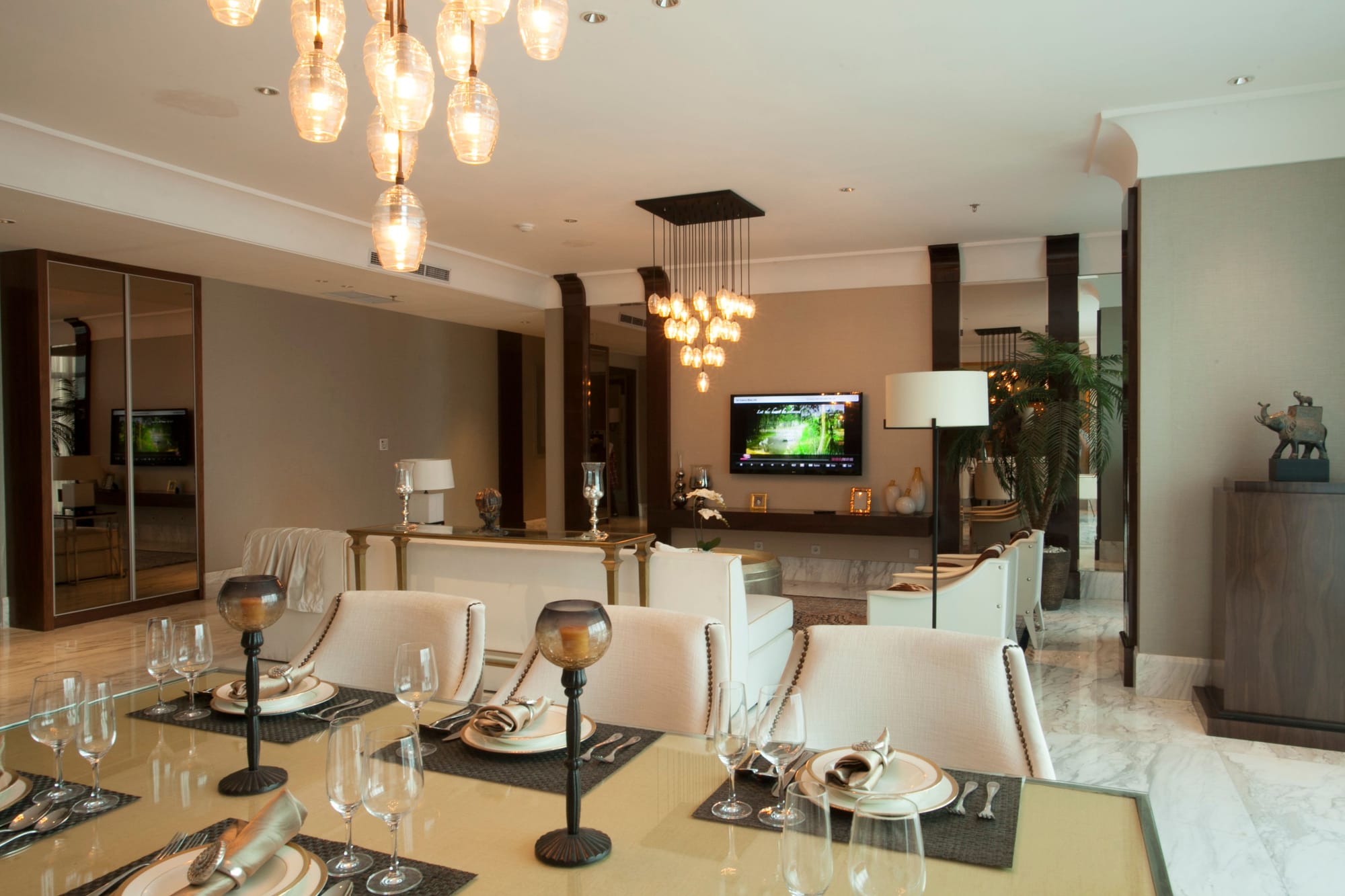
Televisions concealed behind artwork or custom cabinetry.
Automated Window Treatments
Built into architectural details.
Wireless Charging Surfaces
Embedded within furniture.
Concealed Lighting Systems
Integrated directly into ceilings and millwork.
These solutions allow spaces to maintain visual clarity while still delivering advanced functionality.
Lighting as a Design Feature
Lighting is one of the most successful examples of technology and design working together.
Smart lighting systems provide flexibility while enhancing aesthetics.
Modern systems can:
- Adjust brightness automatically
- Change color temperature throughout the day
- Create mood-based scenes
- Improve energy efficiency
The technology itself remains largely invisible.
What occupants notice is the experience.
Thoughtful lighting design creates atmosphere, improves comfort, and supports well-being without drawing attention to the underlying technology.
Simplifying User Interaction
One of the biggest mistakes in smart home design is introducing unnecessary complexity.
Homeowners should not need extensive training to operate their living spaces.
The most effective smart homes prioritize simplicity.
This includes:
Intuitive Controls
Easy-to-understand interfaces.
Automation
Reducing the need for manual adjustments.
Consistency
Predictable system behavior.
Flexibility
Allowing users to override automation when desired.
Technology should feel effortless.
If systems require constant attention, they may be creating more problems than they solve.
Materials and Technology Can Coexist
A common misconception is that technology-driven interiors must feel cold or futuristic.
In reality, some of the most successful smart homes combine advanced systems with warm, natural materials.
Designers frequently balance technology with:
- Wood finishes
- Natural stone
- Textured fabrics
- Organic shapes
- Neutral color palettes
These materials help create environments that feel welcoming and human-centered.
Technology remains present, but it does not dominate the emotional character of the space.
Designing for Longevity
Technology evolves quickly.
Interior architecture typically changes much more slowly.
This creates an important challenge for designers.
A smart home should remain relevant for years, even as devices and software continue to evolve.
Strategies for future-ready interiors include:
- Flexible infrastructure
- Modular systems
- Wireless connectivity
- Upgrade-friendly installations
- Standardized platforms
Good design anticipates change rather than resisting it.
Future-proofing helps protect both functionality and investment.
Wellness Through Intelligent Design
Smart home technology increasingly supports health and well-being.
Modern systems can improve:
Air Quality
Monitoring environmental conditions.
Sleep Quality
Optimizing lighting and temperature.
Comfort
Automatically adjusting climate controls.
Energy Management
Creating healthier and more sustainable living environments.
When integrated thoughtfully, technology can contribute directly to physical and emotional well-being.
This represents one of the most meaningful opportunities in residential design.
Human Experience Comes First
No matter how advanced technology becomes, the purpose of a home remains unchanged.
A home should provide:
- Comfort
- Security
- Functionality
- Connection
- Personal expression
Technology should enhance these experiences rather than compete with them.
Designers who focus solely on innovation risk creating environments that feel impersonal.
The most successful smart homes begin with people and use technology as a supporting tool.
Looking Ahead
The future of smart home design will be defined by integration rather than visibility.
Devices will become smaller.
Systems will become smarter.
Interfaces will become more intuitive.
Technology will continue to fade into the background while delivering increasingly sophisticated capabilities.
For designers, this presents an exciting opportunity.
The challenge is no longer how to add technology to a space.
The challenge is how to make technology feel like a natural part of the environment.
The homes that succeed will not be those with the most devices.
They will be the homes where technology quietly supports daily life while preserving beauty, comfort, and authenticity.
Because great design is not about showcasing innovation.
It is about improving how people live.