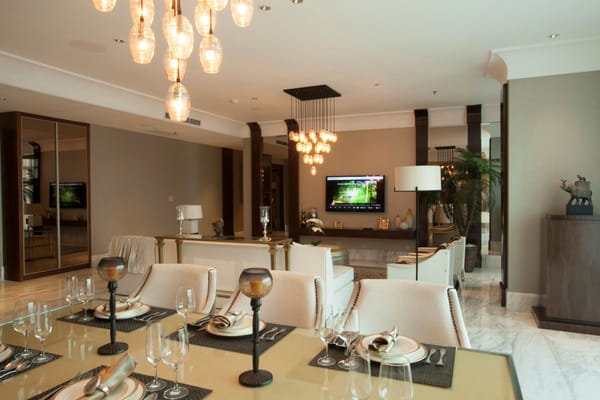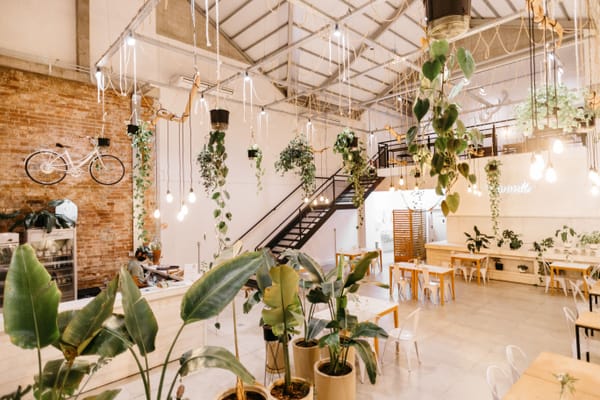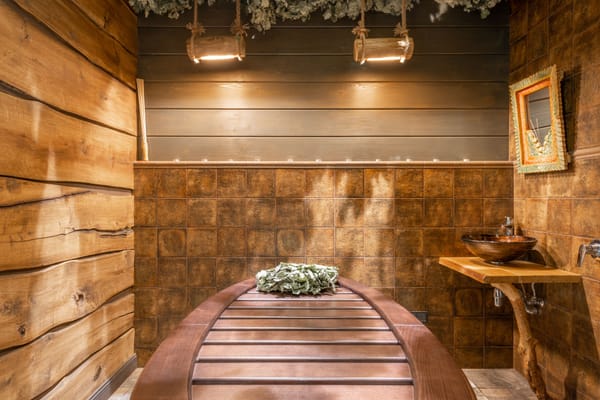

Interior design has traditionally focused on aesthetics, comfort, and functionality.
Designers carefully selected materials, colors, furniture, and layouts to create spaces that reflected both purpose and personality.
Today, a new design layer is becoming equally important.
Technology.
Modern interiors are evolving beyond static environments into intelligent spaces that respond to the needs of their occupants. Lighting adapts automatically. Climate systems learn user preferences. Smart devices communicate seamlessly behind the scenes.
Technology is no longer simply being placed inside spaces.
It is becoming part of the design itself.
The Evolution of Interior Spaces
For decades, interior design primarily addressed physical needs.
Questions focused on:
- How people move through a space
- How furniture supports activities
- How lighting influences mood
- How materials affect comfort
While these principles remain essential, modern environments must now accommodate digital lifestyles.
Homes have become workplaces.
Living rooms have become entertainment hubs.
Kitchens have become connected environments.
As daily habits evolve, interior design must adapt accordingly.
Technology provides new opportunities to create spaces that are both beautiful and intelligent.
"The future of interior design is not about adding more technology. It is about making technology feel natural within the environment."
Smart Homes Become Mainstream
The growth of smart home technology has fundamentally changed residential design.
What was once considered luxury is rapidly becoming standard.
Modern smart home systems can control:
- Lighting
- Security
- Climate
- Entertainment
- Energy consumption
- Window treatments
The challenge for designers is ensuring these technologies integrate seamlessly into the overall environment.
The best smart spaces do not feel technical.
They feel intuitive.
Technology should support daily life without dominating visual aesthetics.
Lighting as an Intelligent Design Element
Lighting has always been one of the most powerful tools in interior design.
Today, technology is making lighting more dynamic than ever.
Smart lighting systems can:
Adapt Throughout the Day
Supporting natural circadian rhythms.
Improve Energy Efficiency
Reducing unnecessary power consumption.
Create Mood-Based Scenes
Adjusting brightness and color temperature automatically.
Enhance Well-Being
Improving comfort and productivity.
Rather than serving a purely functional role, lighting increasingly contributes to health, atmosphere, and user experience.
Designing for Hybrid Living
One of the most significant shifts in recent years has been the rise of hybrid lifestyles.
People now expect spaces to support multiple activities.
A single room may function as:
- A workspace
- A meeting area
- A relaxation zone
- A media room
- A social gathering space
Technology helps make these transitions possible.
Flexible furniture, wireless connectivity, integrated displays, and intelligent controls enable spaces to adapt throughout the day.
Designers are increasingly creating environments that respond to changing needs rather than serving a single purpose.
Sustainability Through Technology
Sustainability is becoming a central priority in modern design.
Technology plays an important role in helping spaces operate more efficiently.
Smart systems can optimize:
- Heating and cooling
- Water usage
- Energy consumption
- Air quality
- Resource management
These capabilities allow homeowners and businesses to reduce environmental impact without sacrificing comfort.
Sustainable design is no longer limited to material selection.
It increasingly includes intelligent resource management.
Invisible Technology Creates Better Experiences
The most successful technology integrations are often the least visible.
Large control panels and exposed devices are gradually being replaced by more seamless solutions.
Examples include:
- Hidden speakers
- Integrated lighting systems
- Voice controls
- Automated sensors
- Wireless charging surfaces
The objective is not to showcase technology.
The objective is to create effortless experiences.
When technology becomes invisible, users can focus on the space itself.
Human-Centered Interior Design
Technology should never become the focal point of a space.
People should remain at the center of every design decision.
Successful interiors consider:
Comfort
Supporting physical and emotional well-being.
Accessibility
Creating inclusive environments.
Simplicity
Reducing complexity and friction.
Personalization
Allowing spaces to adapt to individual preferences.
Technology becomes valuable when it enhances these qualities rather than distracting from them.
The Future of Intelligent Spaces
Emerging technologies will continue to influence how environments are designed.
Future interiors may include:
- AI-powered environmental controls
- Adaptive furniture systems
- Predictive energy management
- Responsive surfaces
- Advanced wellness monitoring
These innovations will further blur the boundary between physical and digital experiences.
However, the goal will remain unchanged.
Design should improve how people live.
Looking Ahead
Technology is transforming interior design in ways that extend far beyond convenience.
It is changing how spaces function, adapt, and respond to human needs.
The most successful interiors of the future will not simply be beautiful.
They will be intelligent, sustainable, and deeply human-centered.
Designers who embrace this balance between technology and experience will help shape environments that are both functional and inspiring.
Because great interior design is no longer just about creating spaces people admire.
It is about creating spaces that actively support the way people live.