For generations, successful farming relied heavily on experience, intuition, and careful observation.
Farmers learned to read weather patterns, understand soil conditions, and recognize signs of crop stress through years of practical knowledge.
While these skills remain invaluable, agriculture is entering a new era.
Today, data is becoming one of the most important tools on the farm.
Precision farming combines traditional agricultural expertise with advanced technology, allowing farmers to make more informed decisions based on real-time information.
The goal is simple.
Produce more while using fewer resources.
What Is Precision Farming?
Precision farming is an agricultural management approach that uses data and technology to optimize farming operations.
Rather than treating an entire field as a single unit, precision agriculture recognizes that conditions often vary across different areas.
These variations may include:
- Soil fertility
- Moisture levels
- Crop health
- Pest pressure
- Nutrient availability
By understanding these differences, farmers can apply resources more accurately and efficiently.
This targeted approach helps improve productivity while reducing waste.
"Precision farming replaces assumptions with information, allowing farmers to make decisions based on actual field conditions."
Why Data Matters in Modern Agriculture
Agriculture has always depended on decision-making.
Every season involves choices about:
- Planting schedules
- Irrigation timing
- Fertilizer applications
- Pest management
- Harvest planning
Historically, many of these decisions were based on observation and historical experience.
Today, technology provides additional insights through data collection and analysis.
Farmers can now access information that was previously unavailable or difficult to obtain.
This enables more accurate and timely decision-making throughout the growing season.
The Role of Sensors
Sensors have become one of the most valuable tools in precision agriculture.
Placed throughout fields, these devices continuously collect environmental data.
Common applications include:
Soil Moisture Monitoring
Helps determine exactly when irrigation is needed.
Nutrient Analysis
Provides insights into soil fertility levels.
Temperature Tracking
Supports crop management decisions.
Environmental Monitoring
Measures conditions that influence plant growth.
Real-time information allows farmers to respond quickly to changing field conditions.
Satellite Technology and Field Mapping
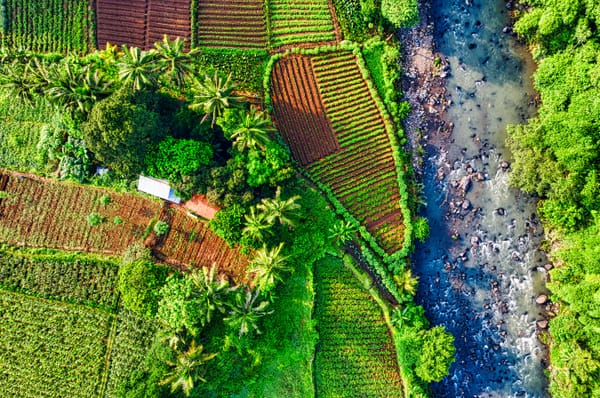
Satellite imagery has dramatically improved agricultural monitoring.
Modern satellites can capture detailed information about crop performance across large areas.
Benefits include:
- Monitoring plant health
- Identifying stress zones
- Tracking crop development
- Evaluating field variability
- Supporting yield forecasting
Satellite data provides a broader perspective that complements on-the-ground observations.
Farmers can identify potential issues early and take corrective action before significant losses occur.
Drones Expand Visibility
Drone technology is becoming increasingly common in agriculture.
Equipped with advanced cameras and sensors, drones provide detailed aerial views of fields.
They can help farmers:
Detect Crop Stress
Identify problems before they become visible at ground level.
Monitor Irrigation Systems
Locate inefficiencies or failures.
Assess Plant Health
Analyze growth patterns and vegetation conditions.
Improve Field Scouting
Reduce the time required to inspect large areas.
Drones offer a practical way to gather high-resolution data quickly and efficiently.
Smarter Irrigation Management
Water is one of agriculture's most valuable resources.
In many regions, efficient water use is becoming increasingly important due to climate pressures and growing demand.
Precision irrigation systems use data to optimize water application.
These systems may incorporate:
- Soil moisture sensors
- Weather forecasts
- Automated controls
- Crop growth data
The result is more accurate irrigation scheduling.
Farmers can provide crops with the water they need while avoiding unnecessary waste.
This benefits both productivity and sustainability.
Variable Rate Technology
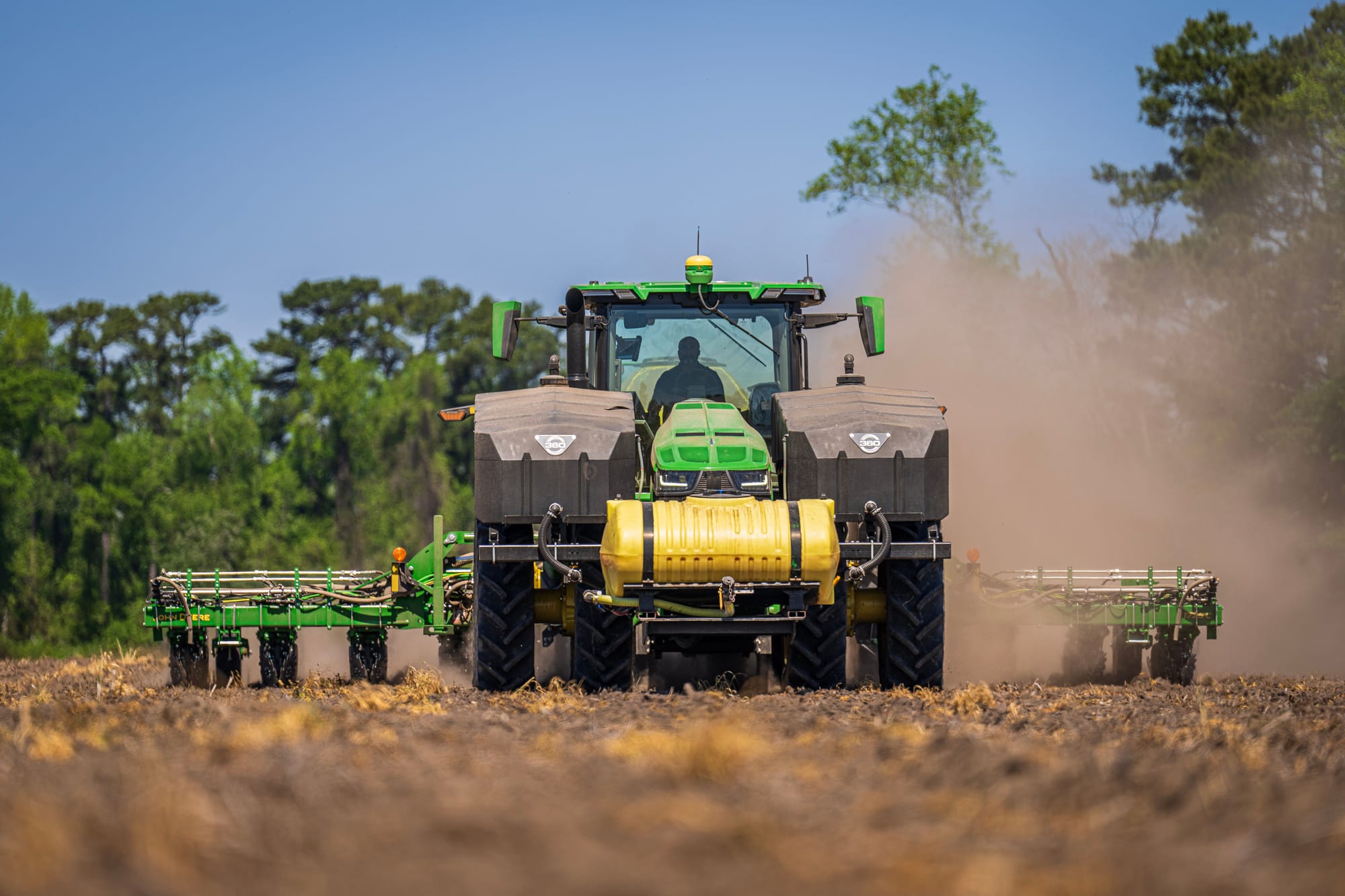
One of the most powerful applications of precision farming is variable rate technology.
Traditional farming often applies fertilizers, seeds, or crop protection products uniformly across entire fields.
Variable rate systems allow application rates to change based on local conditions.
For example:
- Areas with lower fertility may receive additional nutrients.
- Productive zones may require fewer inputs.
- Specific regions may receive targeted treatments.
This approach improves efficiency while reducing costs and environmental impact.
Artificial Intelligence and Predictive Analytics
The volume of agricultural data continues to grow rapidly.
Artificial intelligence helps farmers transform this information into actionable insights.
AI-powered tools can assist with:
Yield Prediction
Forecasting production outcomes before harvest.
Disease Detection
Identifying early signs of plant health issues.
Resource Optimization
Improving input allocation.
Risk Assessment
Supporting planning and decision-making.
These capabilities help farmers respond proactively rather than reactively.
Sustainability Through Precision
Precision agriculture supports environmental sustainability by reducing unnecessary resource consumption.
Benefits include:
- Lower water usage
- Reduced fertilizer waste
- Fewer chemical applications
- Improved soil health
- Lower energy consumption
This approach allows farms to increase efficiency while minimizing environmental impact.
Sustainability and productivity are increasingly becoming complementary goals rather than competing priorities.
Challenges to Adoption
Despite its advantages, precision farming also presents challenges.
Some barriers include:
Initial Investment Costs
Advanced equipment and software can require significant capital.
Technical Complexity
Farmers may need training to use new systems effectively.
Data Management
Large volumes of information require organization and interpretation.
Connectivity Limitations
Rural internet infrastructure can impact technology deployment.
As technology becomes more affordable and accessible, many of these barriers are gradually decreasing.
The Future of Data-Driven Farming
The next generation of precision agriculture will likely involve even greater integration between technology platforms.
Future developments may include:
Autonomous Equipment
Machines capable of operating with minimal human intervention.
Real-Time Decision Systems
Instant recommendations based on changing conditions.
Advanced Predictive Models
Improved forecasting for weather, yields, and risks.
Connected Farm Ecosystems
Multiple technologies working together through shared data platforms.
These innovations will help farmers operate with greater efficiency and resilience.
Looking Ahead
Agriculture has always depended on making the right decisions at the right time.
Precision farming enhances that process by providing better information.
Data does not replace agricultural expertise.
It strengthens it.
The most successful farms of the future will combine generations of farming knowledge with modern technology and analytics.
By understanding field conditions in greater detail, farmers can optimize resources, improve productivity, and build more sustainable operations.
Because in modern agriculture, success is increasingly determined not only by what is grown, but by how intelligently it is managed.